When do startups need to add a marketing function?



Establishing a robust marketing function is crucial for startups to effectively communicate their value proposition, engage customers, and move to the next stage of growth. This guide explores when startups should implement marketing functions and provides best practices supported by data and examples from successful companies.
So … when do startups need to bring on marketing?
Startups should consider adding a marketing function as they transition from the product development phase to market readiness. This stage is characterised by having a customer-ready Minimum Viable Product (MVP) and the need to create awareness, generate leads, and drive growth. The marketing function becomes essential for effectively communicating the startup's value proposition, understanding market dynamics, engaging prospective customers and testing the offering.
Stages for implementing a marketing function
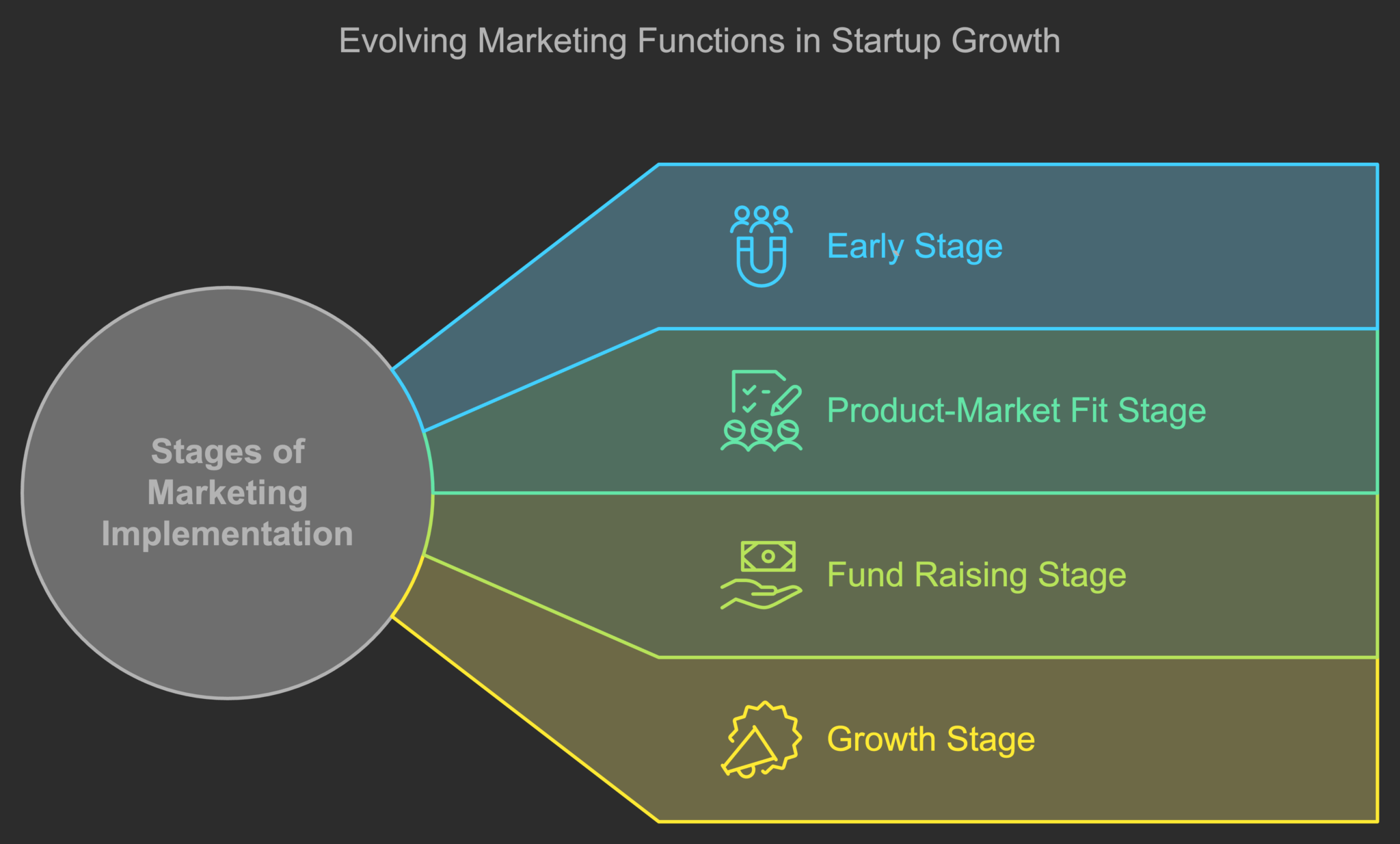
Early stage
Initially, founders often manage marketing responsibilities themselves. This stage focuses on understanding customer needs and iterating the product accordingly. However, this often detracts from crucial activities like product development and capital raising, creating need for establishment support.
Product-market fit stage
Once a startup has achieved product-market fit, putting in place a basic marketing function becomes essential. This involves hiring an initial marketing person, building a small team, or procuring outsourced specialist marketing services to develop strategies, brand identity, offer messaging and content creation.
Fund raising stage
Investors often seek a clear roadmap and go-to-market strategy as part of their investment considerations. A marketing specialist can translate strategies into actionable plans and guide communications, demand generation, and prospect engagement, helping instil investor confidence.
Growth stage
As the startup scales, the marketing function should expand and specialise. This includes refining the brand, executing growth marketing tactics, and investing in digital marketing, organic marketing, PR, and partnerships.
Implementation process
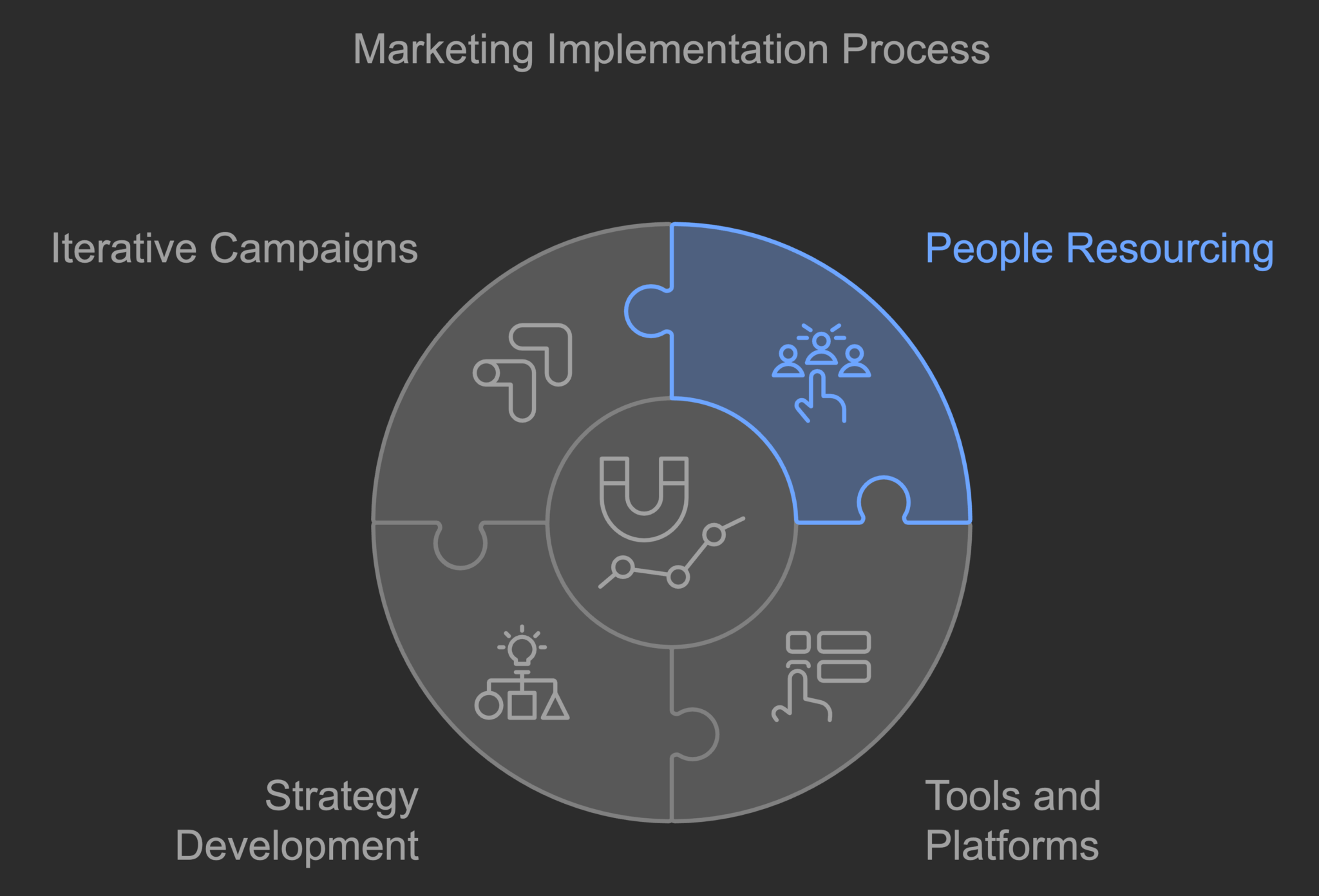
People resourcing
Hiring a versatile marketing professional who can handle multiple aspects of marketing is advisable — creating content, managing social media, and understanding analytics. Initially, securing a full-time specialist may be a challenge. Outsourced marketing services are a viable option in the early stages to establish a marketing function.
Tools and platforms
Leveraging affordable digital marketing tools and platforms to create, manage, and track marketing campaigns efficiently will be an inevitable element of the go-to-market process.
Strategy development
Develop a go-to-market strategy that outlines target audiences, key messages, and channels to reach potential customers. Many early hires may be individual contributors coordinating aspects of plan implementation and could benefit from being supported by a fractional CMO or a part-time marketing advisor.
Iterative approach
Start with small-scale campaigns to analyse results and refine strategies based on key metrics of performance data, user engagement, and customer feedback. Both awareness and lead generation campaigns should be implemented.
Best practices for startups introducing a marketing function
Define product marketing
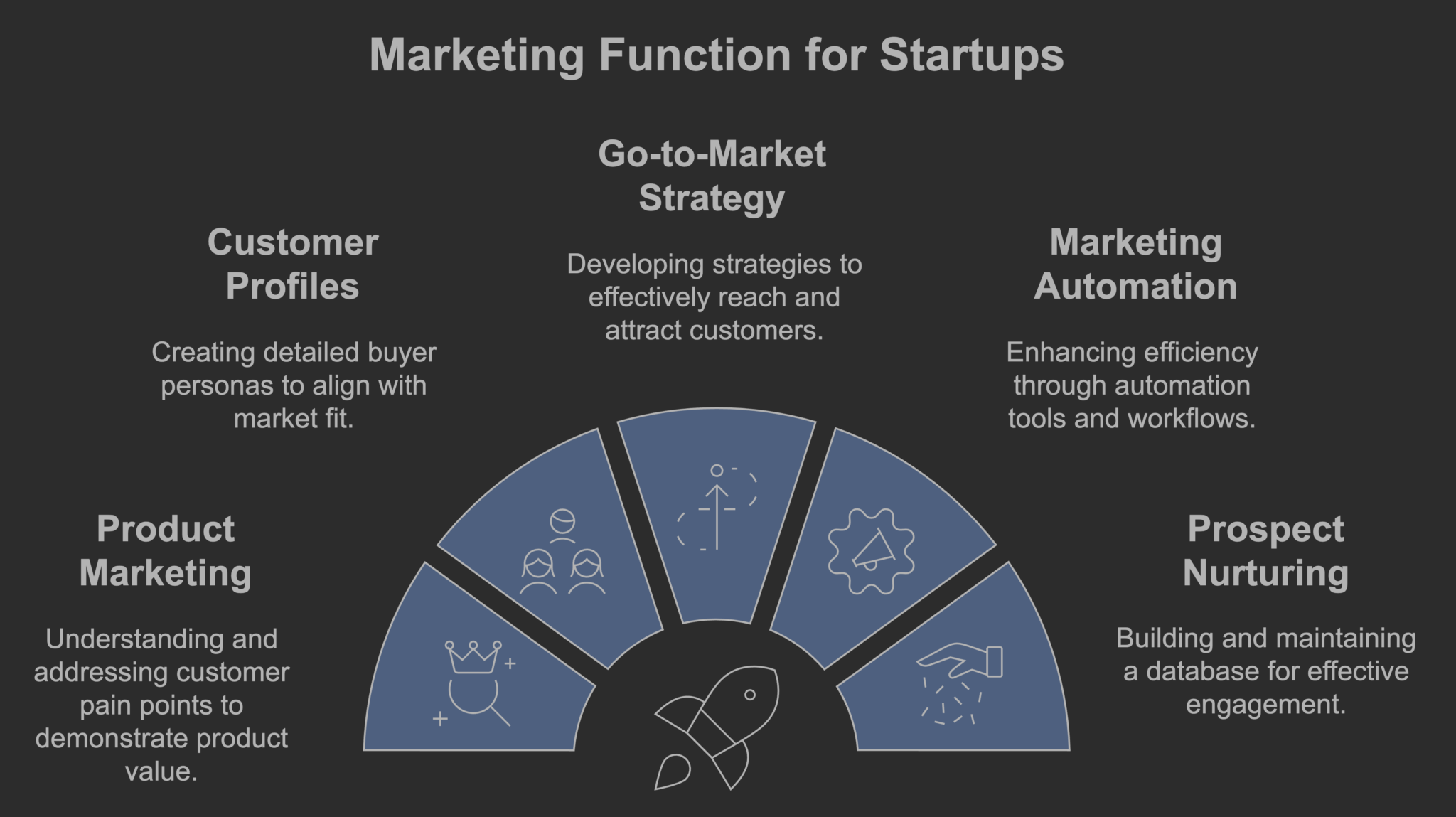
Understanding the role of product marketing is crucial in implementing effective marketing and sales strategies. Clearly identify the problems your startup's offering solves, how pain points are addressed, and the value gains achieved.
Dropbox's referral program incentivised users to promote the product by offering additional storage space.
Customer profile & target market segmentation
Develop detailed customer profiles and buyer personas to guide your marketing efforts. Align target market segmentation with product-market fit.
HubSpot utilised inbound marketing to attract customers through valuable content rather than traditional advertising.
Create a go-to-market strategy and implementation plan
Establish how your product will reach and attract customers. Develop a comprehensive go-to-market strategy guide.
Apple's approach involves clear product differentiation by creating new market segments with unique and innovative products. Apple prioritises customer experience by providing a seamless user experience and effective use of digital marketing channels. Apple's Brand Marketing Strategy: A Case Study on Brand Image and Customer Engagement, December 2023.
Automate marketing workflows
Consider automation to enhance marketing efficiency, although be aware of limitations in starter packages which may not include these features.
Email marketers using tools like MailerLite have seen click-through rates double.
Enable prospect list building & nurturing
Continuously capture leads, prospects, and partners. Build an email list and contacts database for effective one-to-one marketing and audience engagement.
96% of visitors that come to your website are not ready to buy but may provide contact information for nurturing until they are ready to convert.
Develop clear marketing roles
Establish clear responsibilities for the marketing function and integration with other teams using frameworks like RACI to improve team effectiveness.
Slack's content marketing strategy involved creating targeted content like blogs and webinars aimed at the tech industry.
Resource & network building
Gain access to essential resources, networks, and channel partnerships to enhance market reach for effective value creation.
Uber used partnerships with other companies to build brand awareness during its early days.
Key takeaways
- scheduleTiming is crucial: Establishing a marketing function should align with achieving product-market fit.
- buildStrategic resourcing and tools: Employ versatile professionals and leverage digital tools for efficient campaign management.
- loopIterative and data-driven approach: Continuously refine strategies based on performance data to optimise outcomes.
Implementing a robust marketing function is essential for startup success. By understanding when to add this function, following structured implementation processes, and adhering to best practices, startups can effectively engage customers and drive growth. This structured approach ensures that startups can build a strong foundation for sustainable growth through effective marketing strategies.
Get in touch with Kaikiri Media to help with your marketing journey — [email protected]
Sources
1. 7 Steps to Startup Marketing Strategy [Guide 2024] — Brand24
2. Startup Marketing Strategy: 18 Ideas and Tactics That Actually Work — HubSpot
3. 9 Popular Startup Marketing Strategies and Examples — Asper Brothers
4. 5 Effective Marketing Strategies for Startups — The Hartford
5. Apple's Brand Marketing Strategy Case Study — ResearchGate
6. How this busy SaaS content lead uses MailerLite — MailerLite
7. Website and SEO for Lead Generation — Adobe
8. From Concept to Customers: 10 Vital Steps — The Gulf Entrepreneur
9. 3 Highly Effective Marketing Strategies For Startups — Insil